 Switzerland
  Poland
 Czech Republic
  Germany

 Spain
Spain HopSteiner Separation
Solids separation after dry hopping
Reduce beer losses by up to 60%
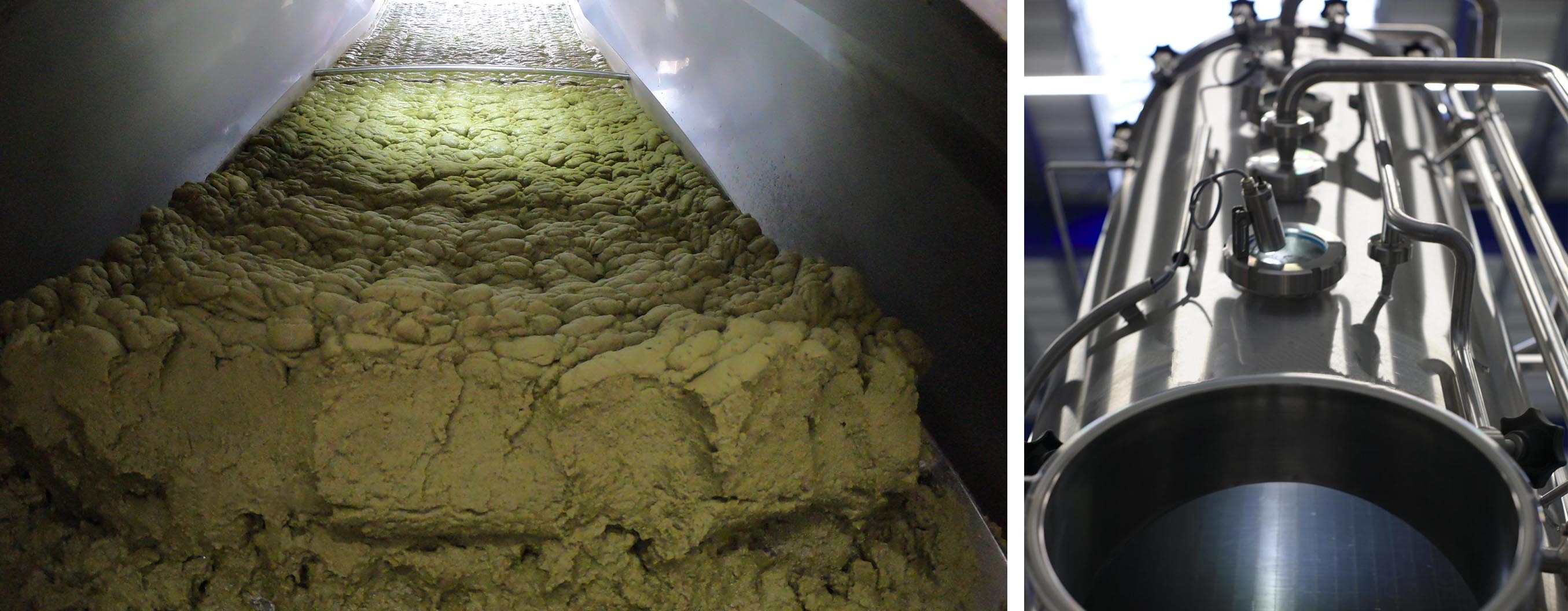
- gentle separation of the hop particles in all phases of fermentation and maturation
- the hop solids possess an average dry matter content of 12 % up to a 60 % reduction in beer losses
- reliable retention of particles > 100 µm
- oxygen-free operation (< 20 ppb)
- reduced “hop creep”
- flexible and simple integration
- shorter tank occupancy
- throughputs of up to 100 hl/h
- safe integration into CIP system
No waiting for hop sedimentation allows faster tank turnaround
With the HopSteiner, hops can be removed from the tank at any time with no fear of oxygen sneaking into the process. This gives
brewers much more freedom with regard to process technology, while also reducing the effluent load at the brewery and ensuring, for example, continuous and trouble-free operation of any downstream centrifuges.
Because there is no need to wait for the hops to sediment out, tank occupancy time is significantly reduced. At the same time, the shorter contact time between the hops and the beer lessens the effects of “hop creep”.
Hygienic design optimized for modern brewery standards
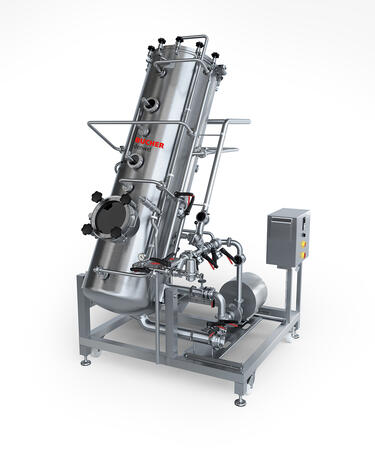
The HopSteiner has been optimized according to the principles of hygienic design and is delivered already mounted on a mobile frame on casters. The HopSteiner can thus be utilized immediately and flexibly at various locations throughout the brewery with no set-up time required.
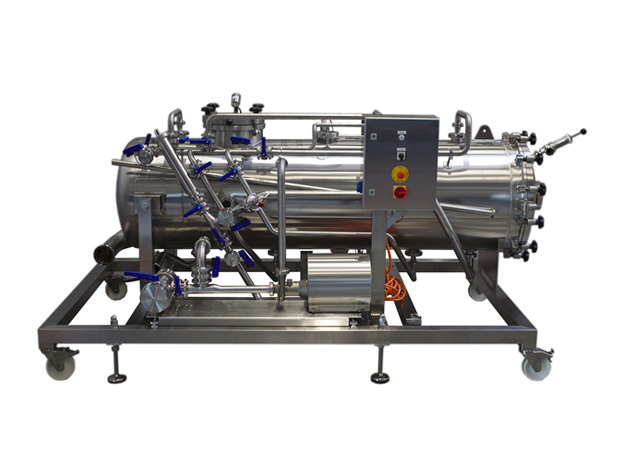
Reliable processing even for large beer batches
Even large batches of beer can be processed reliably with the HopSteiner’s throughput of up to 100 hl per hour.
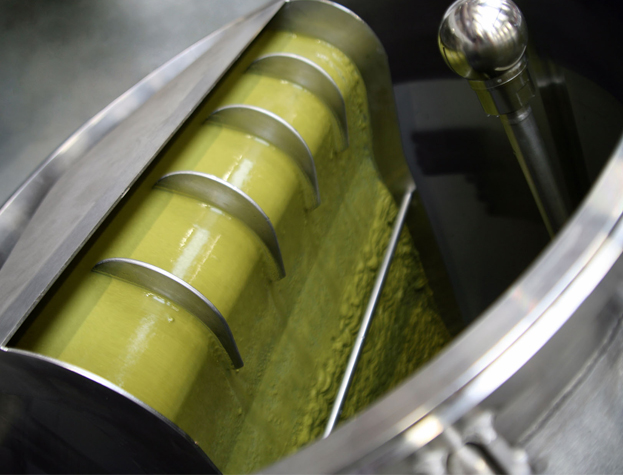
Modular HopSteiner system for easy integration
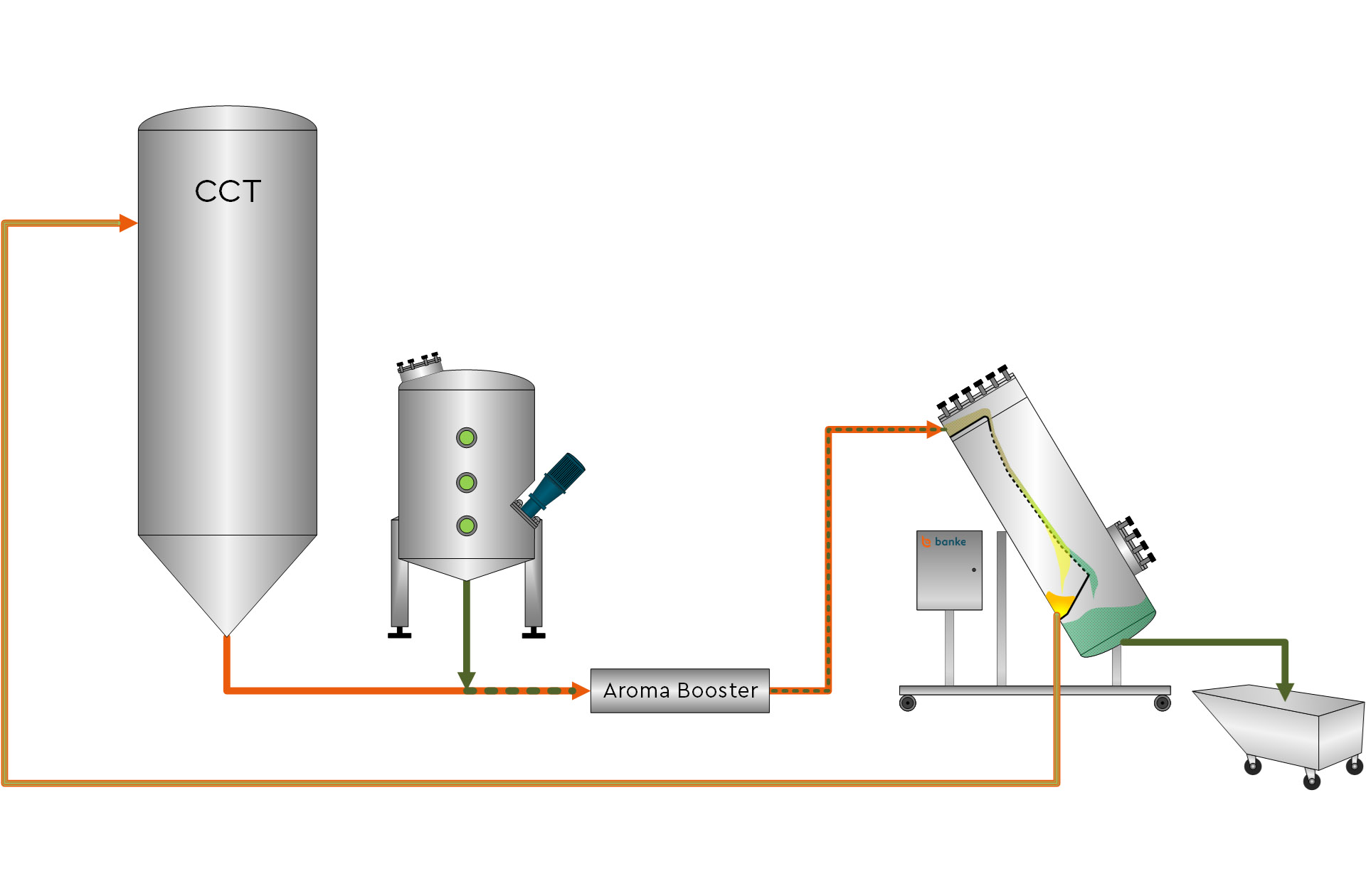
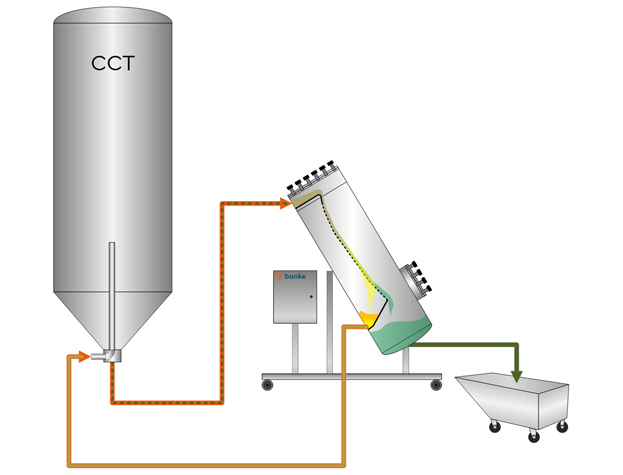
With its own beer backflow controller, the HopSteiner can be integrated into the dry hopping process quite easily as an independent module, even with manual operations. This also applies to the CIP system.
The HopSteiner offers additional advantages in combination with the Loopulator. Similar to the LoopulEX system, external dry hopping with solids retention in the bypass is possible. The hops are extracted entirely outside of the tank. The solids are then separated afterwards. This results in further potential for savings and options for enhancing the process, for example, when employing new yeast strains for non-alcoholic beers.